 |
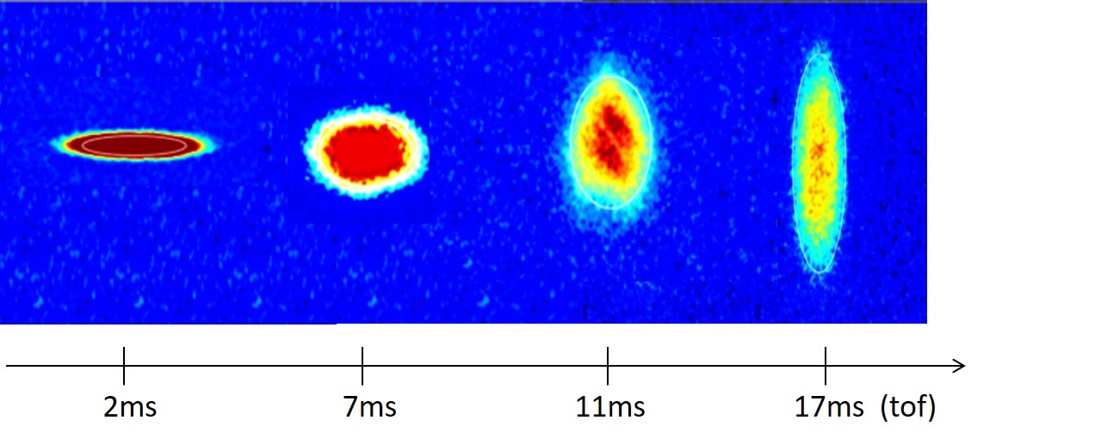
In the middle of the hot Tuscan summer, we could bring to quantum degeneracy large samples of 6Li atoms in our setup. With the same all-optical strategies already developed in the LiLab, we can achieve crossover superfluids, as well as highly degenerate Fermi gases, of up to 1 million atoms. (In the image, the hydrodynamic expansion of a crossover superfluid of about 700000 pairs). |

Welcome to the website of the Ultracold Quantum Gases group at the European Laboratory for Nonlinear Spectroscopy (LENS), the Department of Physics and Astronomy of the University of Florence (Italy) and the Institute of Optics of the Italian National Research Council (CNR - INO). In our labs we use lasers and magnetic fields to produce the lowest temperatures of the Universe, just a few billionths of a degree above absolute zero...
At these temperatures, atoms stop moving and we can control them for a variety of different fundamental studies and applications. We can force atoms to arrange according to a periodic structure and simulate the behavior of crystalline solids and new materials. We can use the atoms as ultra-high accurate sensors to probe forces with the power of quantum mechanics. We can study how quantum particles combine together under the action of strong interactions and how superfluidity develops. We can use these ultracold atoms to process information and develop new quantum technologies.
Dress warmly and... follow us for this ultracold journey!
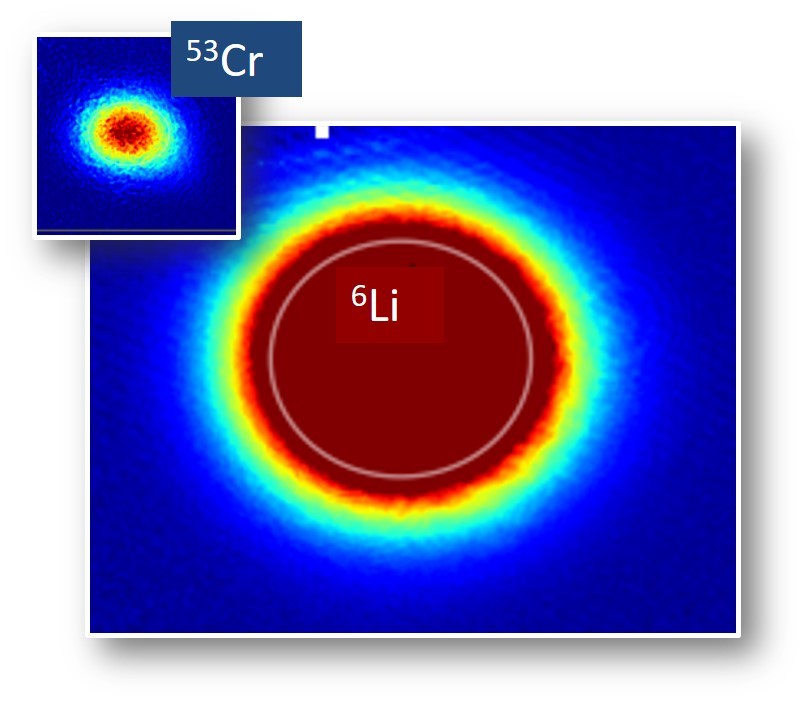 |
We brought into the cold regime the first chromium-lithium fermionic mixture worldwide. within a 5 sec. duty cycle, we produce samples of about 4 million chromium and 300 million lithium atoms at a few hundreds of microKelvin. Our work just got published in Phys. Rev. A. E. Neri, et al., |
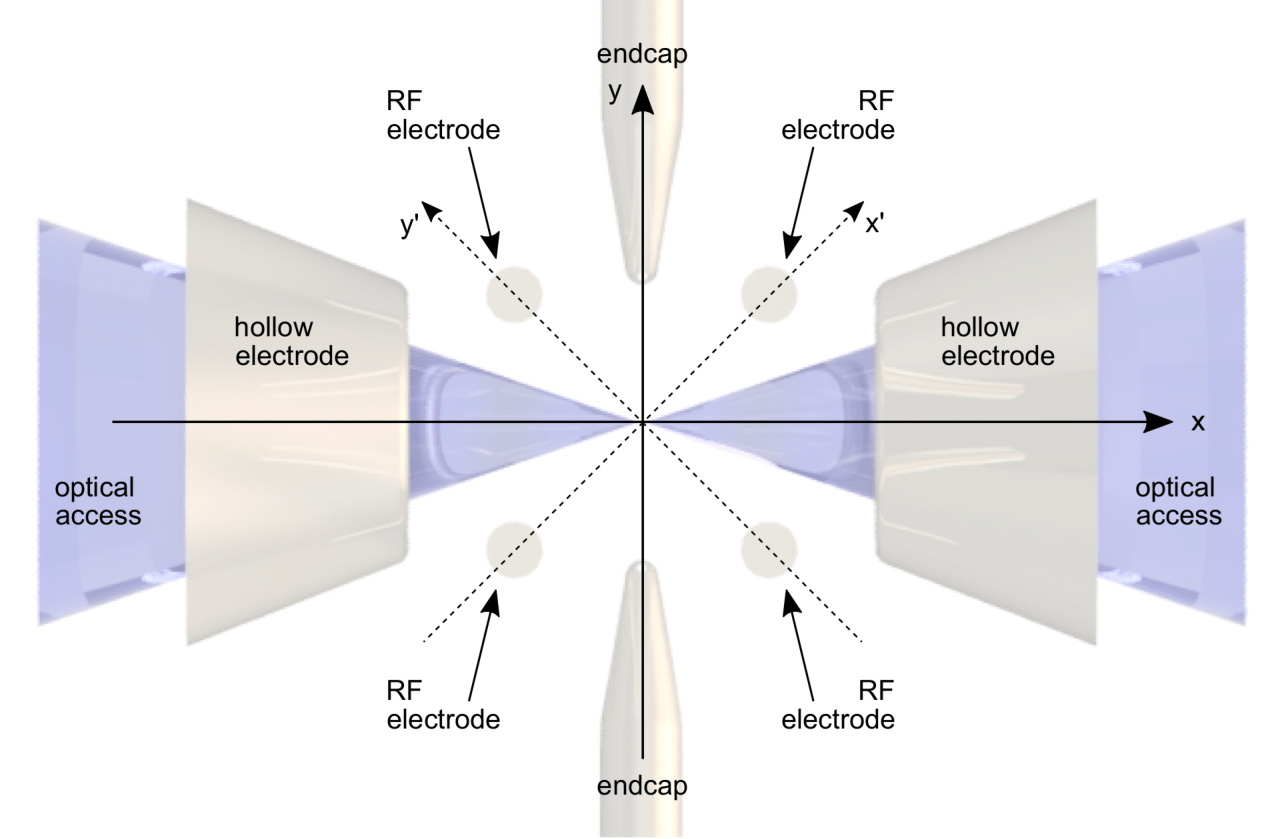 |
One of the main limitations in state-of-the-art atom-ion experiments is represented by the micromotion component of the ions’ dynamics in a Paul trap that prevents atom-ion mixtures from undergoing a coherent evolution. Overcoming this problem requires a completely new approach to ion trapping. Our solution is a novel micromotion-free electro-optical trap based on the combination of an optical and a static electrostatic field. In this paper, we describe the geometry and the assembly of an electro-optical trap explicitly designed for experiments with atom-ion mixtures, in our case a mixture of Barium ions and Lithium atoms. We also report the results of the numerical simulations performed on the electric and thermal behavior of the trap, providing fundamental information for establishing the trapping potential and the stability region. E. Perego, et al. |
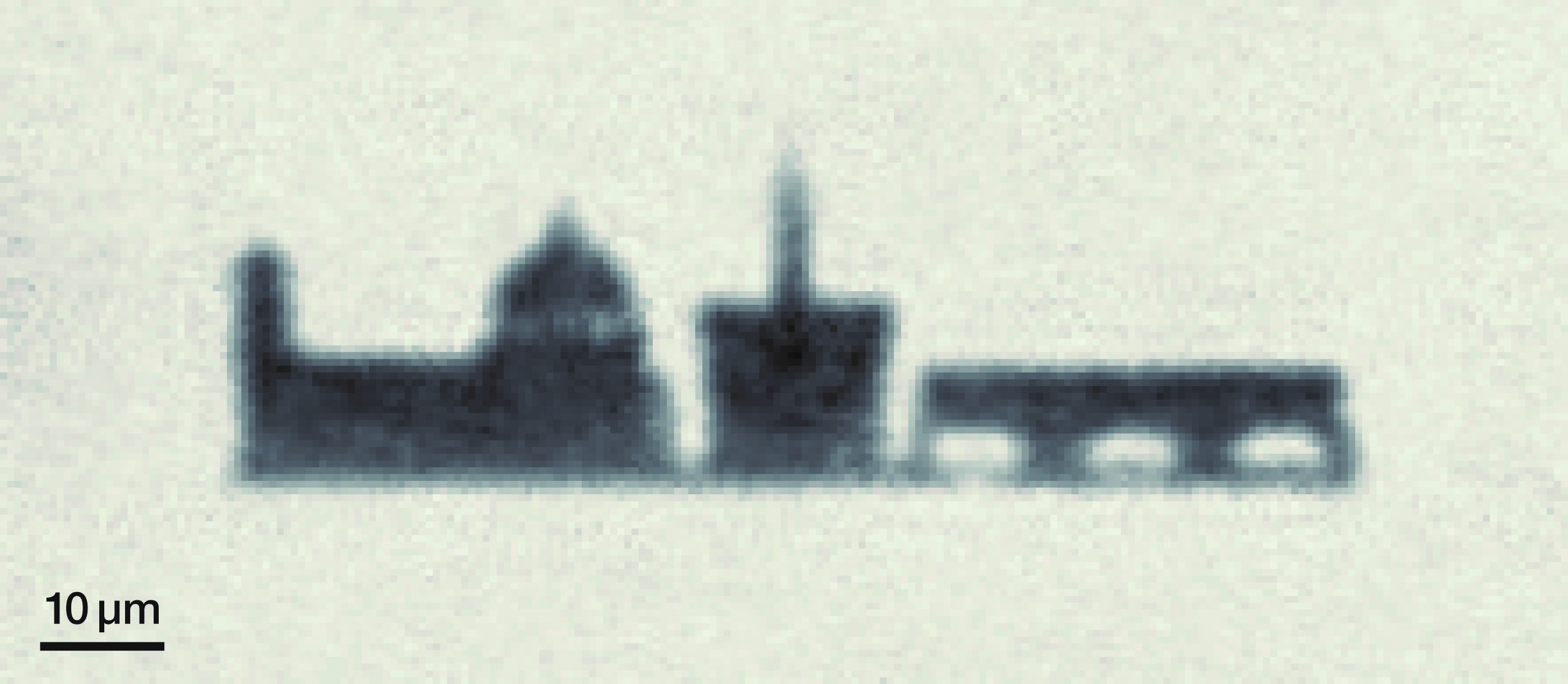 |
We have projected micron-scale light potentials onto quasi-2D degenerate Fermi gases of lithium-6. A single atomic layer is created by vertically compressing a 3D atomic cloud into a highly anisotropic blue-detuned TEM01-mode optical trap, with very weak in-layer confinement. A digital micromirror device (DMD) is then used here to mold the skyline of Florence in a unitary Fermi gas. The sample is imaged with micron resolution by the same high-resolution objective used for focusing the sculpted light potential. These new capabilities enable exciting investigations of fermionic quantum transport and out-of-equilibrium dynamics in a large variety of paradigmatic scenarios. |
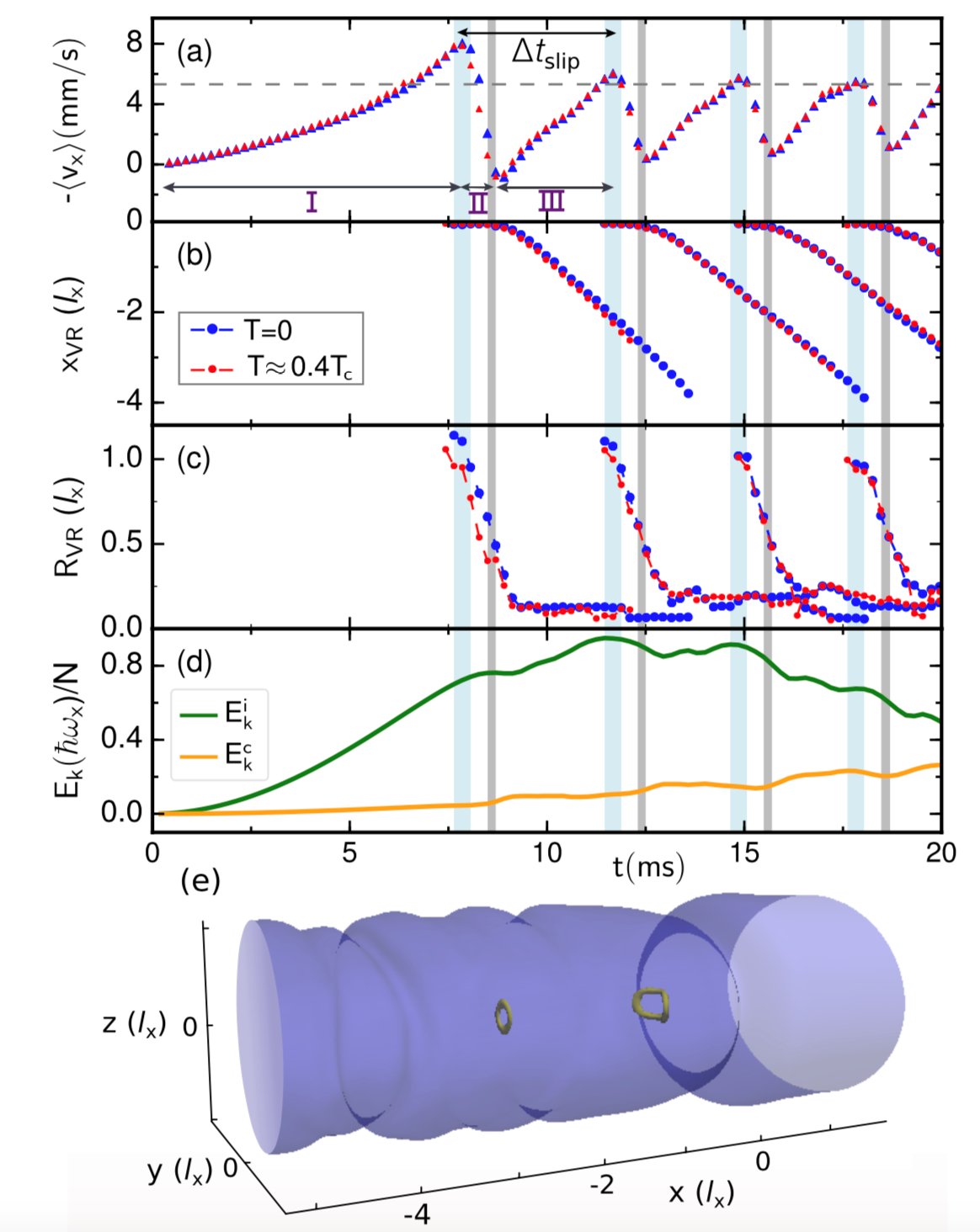 |
We theoretically investigate the onset of dissipation in the Josephson dynamics between two atomic Fermi superfluids. We demonstrate that resistive currents are directly connected with nucleations of vortex rings and their propagation into the superfluid bulk. We compare the simulations with our recent experimental results, finding excellent agreement. This work has been carried out in collaboration with the theory group of the University of Newcastle, led by Prof. Proukakis and it will be valuable for advancing our comprehension of the complex superfluid transport in emerging atomtronic devices. K. Xhani et al. |